Chemistry Blog
Clear, practical guides to the ideas behind the definitions.
-
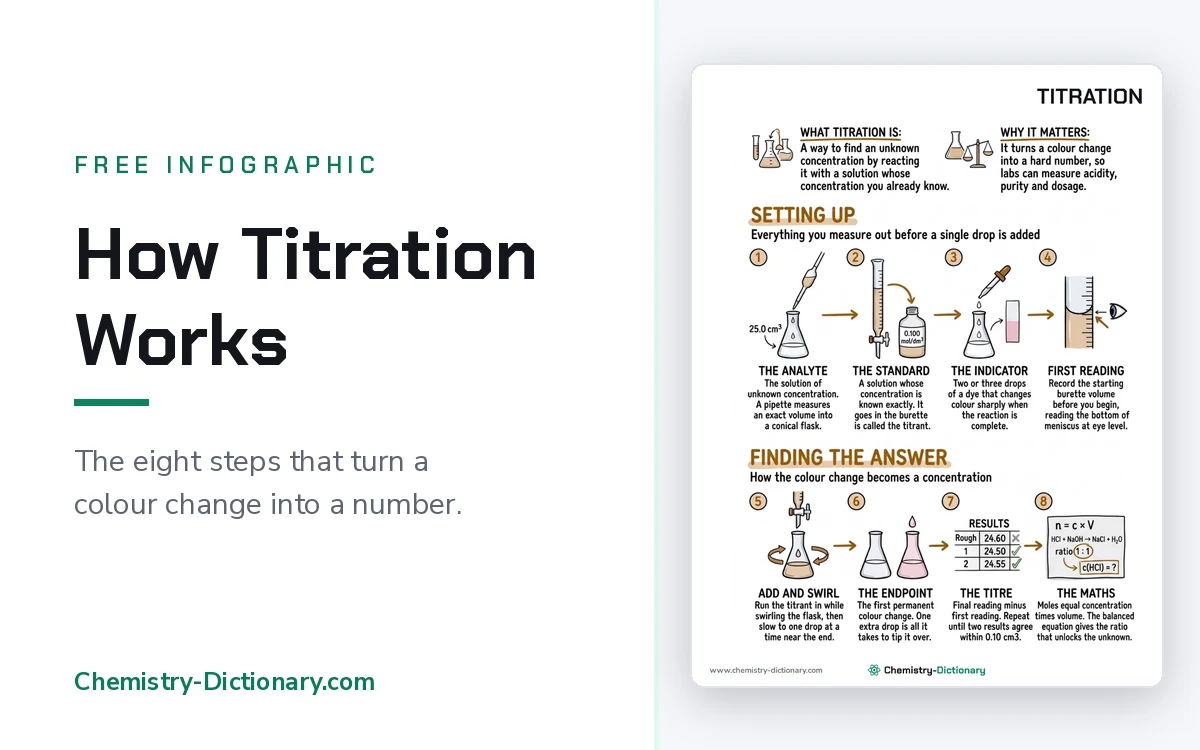 How Titration Works (Infographic)
 A free eight-step infographic explaining how a titration finds an unknown concentration, with a worked example and embed code to use it on your own site.
-
 What Does Aqueous Mean in Chemistry?
 Aqueous means dissolved in water, written (aq) in equations. Learn the state symbols, how ions dissociate, and why liquid water is (l) and not (aq).
-
 What Are Reactants in Chemistry?
 Reactants are the starting substances used up in a chemical reaction. See how to read them in an equation, plus limiting reactants, catalysts and spectator ions.
-
 Solute vs Solvent vs Solution: What's the Difference?
 The solute is what dissolves, the solvent does the dissolving, and the solution is the mixture that results. A clear comparison with saltwater examples.
-
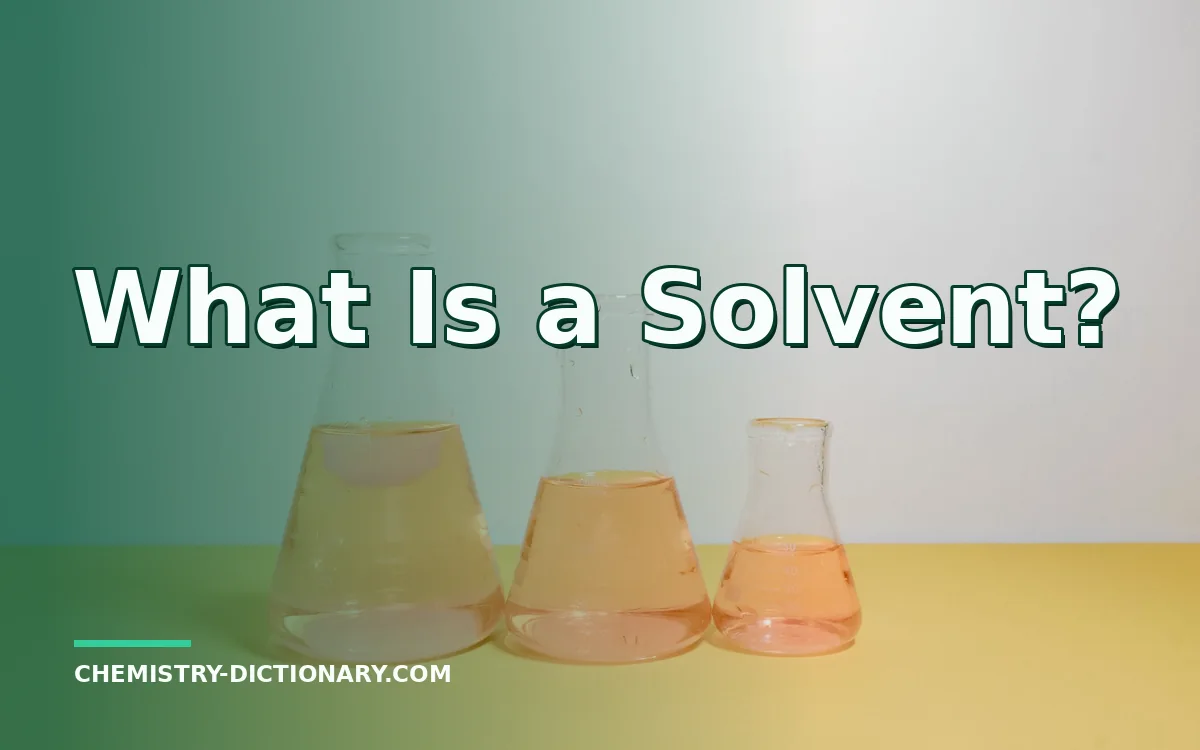 What Is a Solvent in Chemistry?
 A solvent is the substance present in the greatest amount in a solution, the one that does the dissolving. How solvents work, with examples and a table.
-
 Endothermic vs Exothermic Reactions: What's the Difference?
 Endothermic reactions absorb heat and cool surroundings (delta H positive). Exothermic reactions release heat and warm surroundings (delta H negative).