Alchemy
Definition and meaning of Alchemy in chemistry.
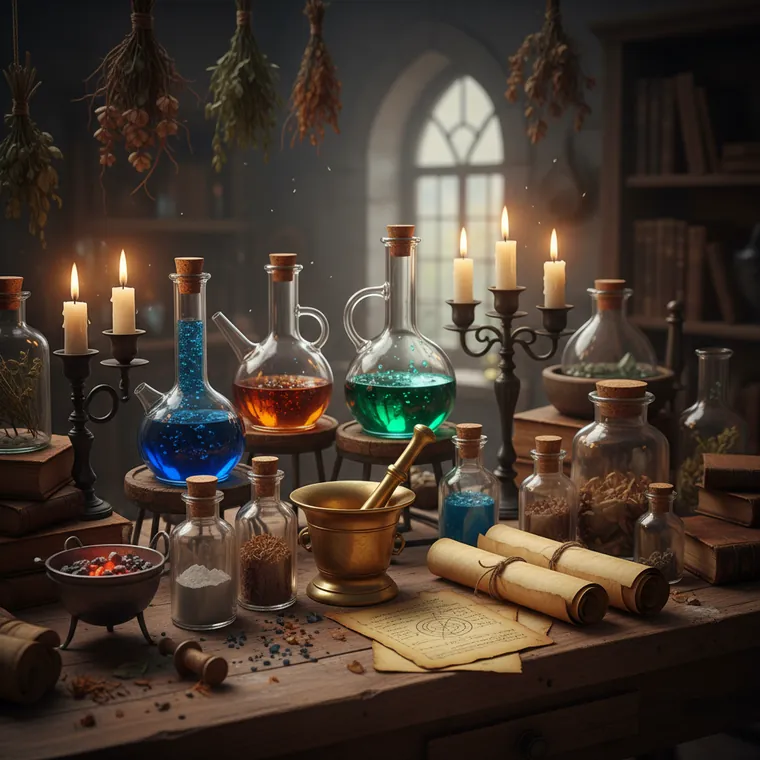
Alchemy is an ancient philosophical and pseudoscientific tradition that existed long before chemistry. Its main historical goals were turning cheap metals into gold and achieving immortality. Practitioners spent centuries searching for a magical potion known as the elixir of life.
In more detail
Alchemy started in ancient times and reached its peak during the European Renaissance. Practitioners experimented extensively with heavy metals, natural minerals, and various early chemical processes. However, their physical work relied heavily on magic, mysticism, and complex spiritual beliefs.
They did not use the strict scientific method that modern professional chemists use today. Their most famous overall goal was a mystical process known formally as transmutation. This meant trying to convert cheap base metals like lead into highly precious gold.
A common student misconception is that historical alchemists were just foolish magicians or frauds. In reality, alchemy represents a very important stepping stone in the history of science. Alchemists completely failed to make real gold or conquer the inevitability of human death.
However, they accidentally invented many essential laboratory tools along their long historical journey. They designed specialized laboratory glassware that professional chemists still use in modern labs. They perfected important chemical separation techniques like liquid distillation, physical filtration, and chemical crystallization.
They also recorded incredibly detailed observations about how different physical substances react together. This practical, hands-on laboratory work slowly evolved into the true science of modern chemistry.
Key facts
| Time Period | Ancient times through the European Renaissance |
|---|---|
| Primary Goal | Transmutation of base metals into solid gold |
| Mythical Catalyst | The philosopher's stone |
| Scientific Legacy | Invented distillation and early laboratory glassware |
| Modern View | Considered a pseudoscience due to mystical beliefs |
| Field | General Chemistry |
Medieval European alchemists spent centuries trying to physically transmute molten lead into solid gold. They believed they first needed to create a mythical substance called the philosopher's stone. They genuinely thought this legendary stone would act as a powerful, magical chemical catalyst. They performed countless careful experiments mixing molten lead with elements like sulfur and mercury. They never successfully made gold, but they discovered several brand new chemical elements accidentally.
Frequently asked questions
Did any alchemist ever successfully make real gold?
No, turning cheap lead into precious gold is completely impossible through ordinary chemical laboratory reactions. Only modern nuclear physics can successfully change one chemical element into another completely different element.
Why is alchemy considered a pseudoscience instead of a real science?
Historical alchemists relied heavily on mysticism, secret codes, and magic instead of the objective scientific method. They rarely shared their experimental methods or tested their proposed hypotheses objectively.
Did alchemy contribute anything genuinely useful to modern chemistry?
Yes, alchemists accidentally invented many extremely important laboratory techniques. They perfected chemical distillation and designed the specialized glass boiling flasks that professional chemists still use in laboratories today.