Coke
Definition and meaning of Coke in chemistry.
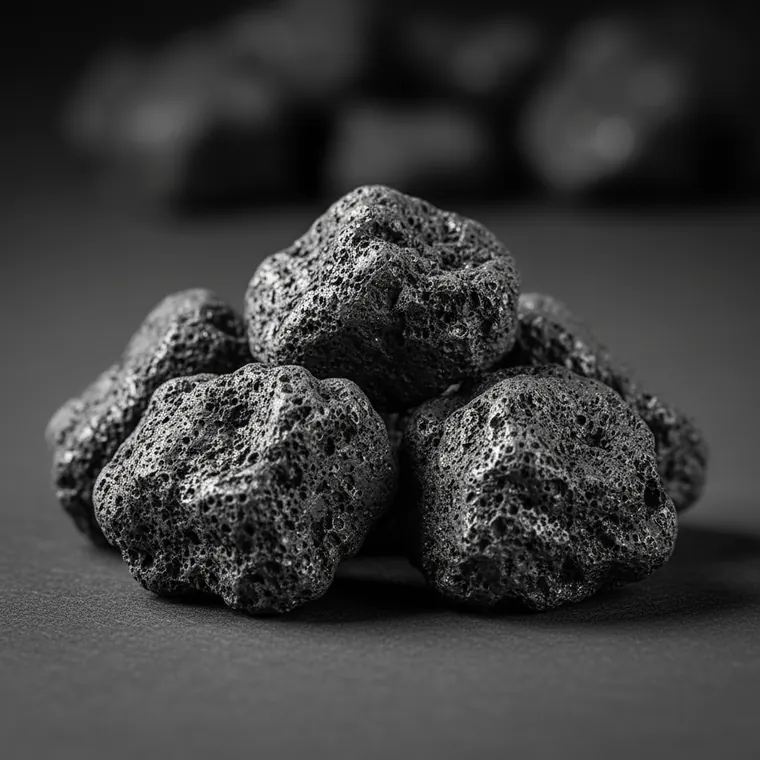
Coke is a hard, porous, carbon-rich solid fuel. Workers make it by heating special coal to extremely high temperatures without any air. This intense baking process drives off unwanted gases and leaves behind a nearly pure carbon rock.
In more detail
This heating process is called destructive distillation or coking. Factories heat the raw bituminous coal to roughly 1100 degrees Celsius. Because there is no oxygen, the coal cannot catch fire and burn.
Instead, the intense heat breaks down complex molecules inside the rock. It completely removes water, smelly tars, and volatile hydrocarbon gases. Factories often collect these gases to make valuable byproducts like coal tar.
The solid chunk left behind is a strong, porous mass called coke. It contains 85 to 98 percent pure carbon along with some mineral ash. Coke is much better for heavy industry than raw coal.
It lacks the volatile gases and sulfur that make raw coal smoke. Therefore, it burns much hotter and leaves the air much cleaner. Its rigid, spongy structure is also incredibly important.
It can support the massive weight of iron ore in a furnace without crushing. These unique physical traits make coke indispensable in modern metallurgy. It serves three roles at once inside a blast furnace. It provides intense heat, physically supports the raw materials, and acts as a chemical reducing agent.
Key facts
| Field | Inorganic Chemistry |
|---|---|
| Formula | C (predominantly carbon, ~85-98%, with mineral ash) |
| Production temperature | ~1000-1100 °C without air |
| Process name | Coking or destructive distillation |
| Primary use | Blast furnace fuel and reducing agent |
| Key physical traits | Hard, porous, and high structural strength |
Coke plays a vital role inside a towering iron blast furnace. Workers dump iron ore, limestone, and chunks of coke into the top. They blast incredibly hot air into the bottom of the furnace. The coke burns fiercely in this air to form carbon monoxide gas. This gas then strips oxygen away from the iron ore. The chemical reaction is Fe2O3(s) + 3CO(g) -> 2Fe(l) + 3CO2(g). The solid iron ore melts down into a pool of pure liquid iron.
Frequently asked questions
How does coke differ from normal coal?
Coal is a raw sedimentary rock dug from the earth. It contains moisture and volatile gases. Coke is the manufactured pure carbon rock left over after coal is baked without air.
Why is coke preferred over raw coal in blast furnaces?
Coke burns hotter and much cleaner than raw coal. It also stays strong and porous at extreme temperatures. This lets it support heavy loads of iron ore without collapsing.
Can you make coke from things other than coal?
Yes. Oil refineries produce petroleum coke from heavy oil residues. They heat the thick oil left over after making gasoline to create a similar carbon-rich solid.
Related terms
Sources & references
See our sources and editorial standards.