Asbestos
Definition and meaning of Asbestos in chemistry.
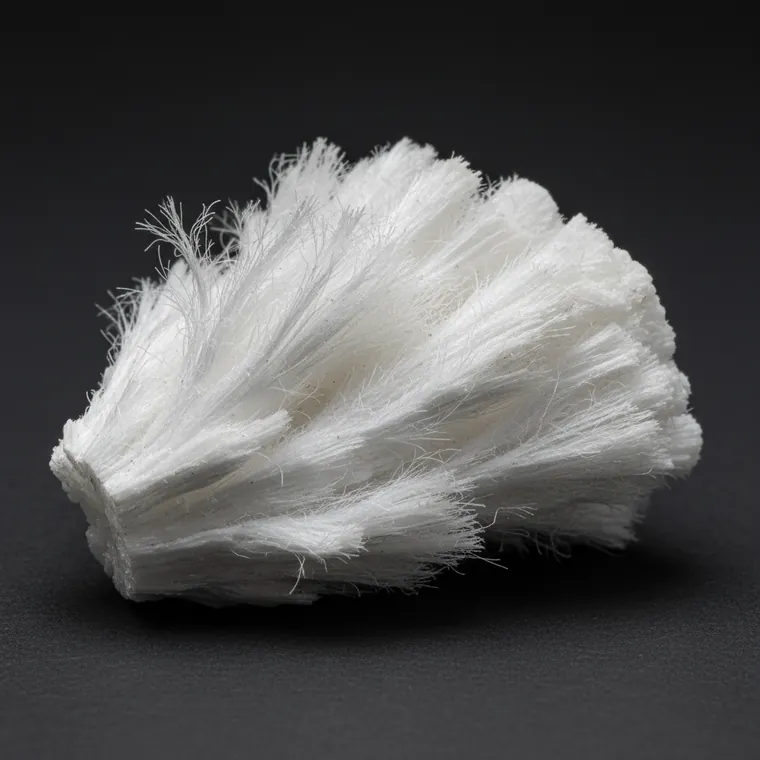
Asbestos is a group of naturally occurring silicate minerals that form long, fibrous crystals. The microscopic fibers cause cancer when people breathe them into their lungs.
In more detail
Geological processes involving heat and pressure create asbestos. The minerals crystalize into two main structural families called serpentines and amphiboles. Chrysotile is white asbestos and belongs to the serpentine group.
It has curly, flexible fibers used for most commercial asbestos products. The amphibole group includes crocidolite and amosite. These are blue and brown asbestos.
These types have rigid, needle-like crystalline structures. Asbestos resists heat, chemical damage, and physical stress very well. This extreme durability makes the fibers highly dangerous inside the human body.
Old asbestos materials easily crumble into a hazardous dust called friable asbestos. Microscopic fibers float in the air during demolition or construction work. People inhale these airborne fibers deep into their lower lung tissue.
The fibers stick firmly in the lung tissue and the chest lining. The human immune system cannot break these tough mineral fibers down. White blood cells try to destroy the fibers but completely fail.
This biological failure causes chronic and persistent inflammation in the lungs. The cells release reactive oxygen molecules that damage nearby cellular DNA. This hidden cellular damage continues silently for 10 to 50 years.
Doctors call this long delay the clinical latency period. The damage eventually causes severe lung scarring called asbestosis. It also causes lung cancer and can trigger a disease called mesothelioma.
Mesothelioma is an aggressive and fatal cancer of the protective lung lining. Smoking tobacco makes the asbestos lung cancer risk much worse. Most developed nations now strictly ban all asbestos mining and manufacturing.
Key facts
| Chemical formula | Complex hydrous silicates; chrysotile is Mg3Si2O5(OH)4 |
|---|---|
| Field | Inorganic Chemistry |
| Primary forms | Chrysotile (serpentine), crocidolite and amosite (amphiboles) |
| Health classification | Group 1 human carcinogen (IARC) |
| Disease latency | Typically 10 to 50 years between initial exposure and symptom onset |
| Primary exposure route | Inhalation of airborne microscopic fibers from friable materials |
A shipyard mechanic cuts asbestos-insulated pipes for many years. Decades later, doctors diagnose him with fatal pleural mesothelioma. This shows the long delay of occupational asbestos exposure. Industrial workers also accidentally brought the dust home on their clothes. Their family members breathed in the highly persistent dust. These relatives later developed the same fatal respiratory diseases.
Frequently asked questions
Why did builders use asbestos if it is dangerous?
Asbestos resists heat and insulates against sound. It is very strong and cheap. Scientists did not fully understand the health hazards at first. Strict rules only started after many workers got sick.
Are all types of asbestos equally dangerous?
All forms of asbestos cause cancer. The exact risk level depends on the physical structure. Amphibole types like crocidolite have brittle, needle-like fibers that easily pierce lung tissue. Chrysotile has curly fibers and is slightly less aggressive, but it remains deadly.
How does asbestos cause cancer in cells?
Inhaled fibers stick deep inside lung tissue. Immune cells try to destroy them but fail. This failure releases inflammatory chemicals and harmful oxygen molecules. These molecules persistently damage DNA and trigger cancer.